In the fast-evolving landscape of 2026 industrial engineering, the question of bespoke steel fabrication vs off the shelf components has never been more consequential. As material costs remain volatile and the UK’s labour market for skilled installers continues to tighten, procurement professionals and project managers are facing a critical choice: do they opt for the perceived low cost of standardised parts, or invest in bespoke steel fabrication services?
At Aldridge Fabrications, we have observed a significant shift. Leading firms in the construction, manufacturing, and logistics sectors are increasingly moving away from off-the-shelf solutions. The reason is simple: “standard” almost always requires “non-standard” effort to install.
The Hidden Cost of Standardised Steel
On paper, mass-produced steel components appear cost-effective. However, the true cost of a component is not the purchase price; it is the Total Cost of Installation (TCI).
When a project manager sources off-the-shelf material handling equipment or structural brackets, they often encounter “integration friction.” This manifests as:
- On-site Remedial Work: The need for cutting, grinding, or re-welded adjustments when standard parts don’t perfectly align with existing site infrastructure.
- Extended Downtime: In a live manufacturing environment, every hour spent “making it fit” is an hour of lost production.
- Compliance Risks: Field-modified components may void original engineering certifications or fail to meet the rigorous safety standards required by the Health and Safety Executive (HSE) for industrial equipment.
By choosing custom metal fabrication, these variables are eliminated during the design and factory-controlled manufacturing phases.
Precision Engineering: The Foundation of Lean Manufacturing
Lean methodology focuses on the elimination of waste — not just material waste, but waste of time and movement. Bespoke fabrication supports this by delivering components that are “Right First Time.”
1. Modular Integration
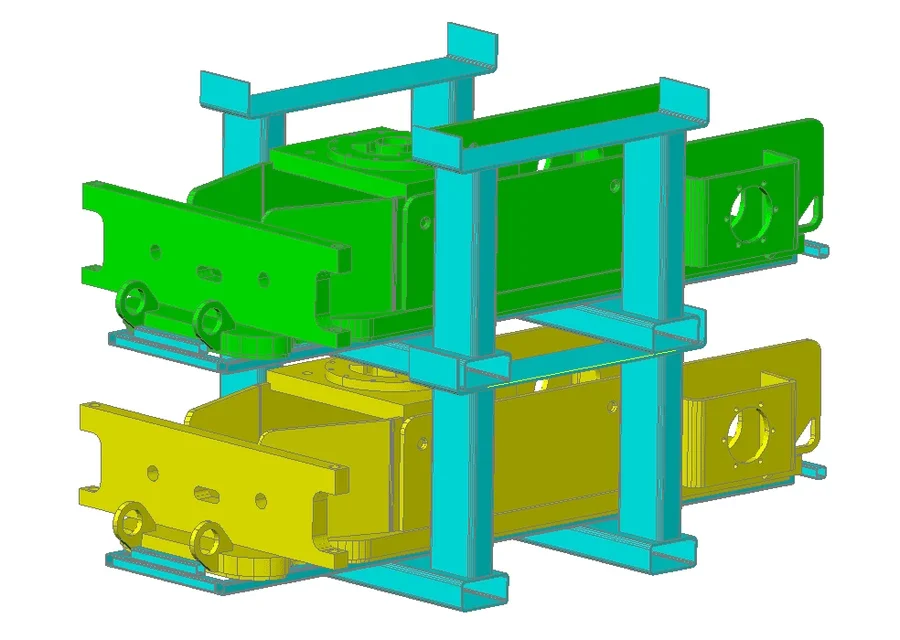
Modern industrial projects in 2026 rely heavily on modularity. We specialise in producing bespoke metal components that act as “plug-and-play” units within a larger system. Whether it is a complex mezzanine support or a custom conveyor frame, our use of precision machining ensures that tolerances are kept to sub-millimetre accuracy. This level of precision is rarely achievable with mass-market products.
2. Material Efficiency and Sustainability
With the UK’s 2050 Net Zero targets drawing closer, industrial carbon footprints are under the microscope. Over-engineering — using more steel than necessary because a “standard” beam size is all that’s available — is no longer acceptable. Bespoke engineering allows for topological optimisation, where we use only the required amount of high-grade steel to meet the structural load, reducing both weight and environmental impact.
Case Study Focus: Material Handling Evolution
The material handling sector provides the clearest example of why bespoke is better. In 2026, automation is the standard for UK logistics. Standard racking and frames often cannot accommodate the sophisticated sensor arrays and high-speed robotic elements found in modern warehouses.
Aldridge Fabrications works directly with design engineers to manufacture material handling equipment that accounts for:
- Vibration Dampening: Custom-welded joints designed to handle the harmonic frequencies of automated sorters.
- Specific Load Paths: Fabrications engineered for the exact weight distribution of proprietary machinery.
- Surface Longevity: Specialised finishing that withstands the 24/7 abrasive wear of industrial throughput.
The Aldridge Advantage: Bridging Design and Delivery
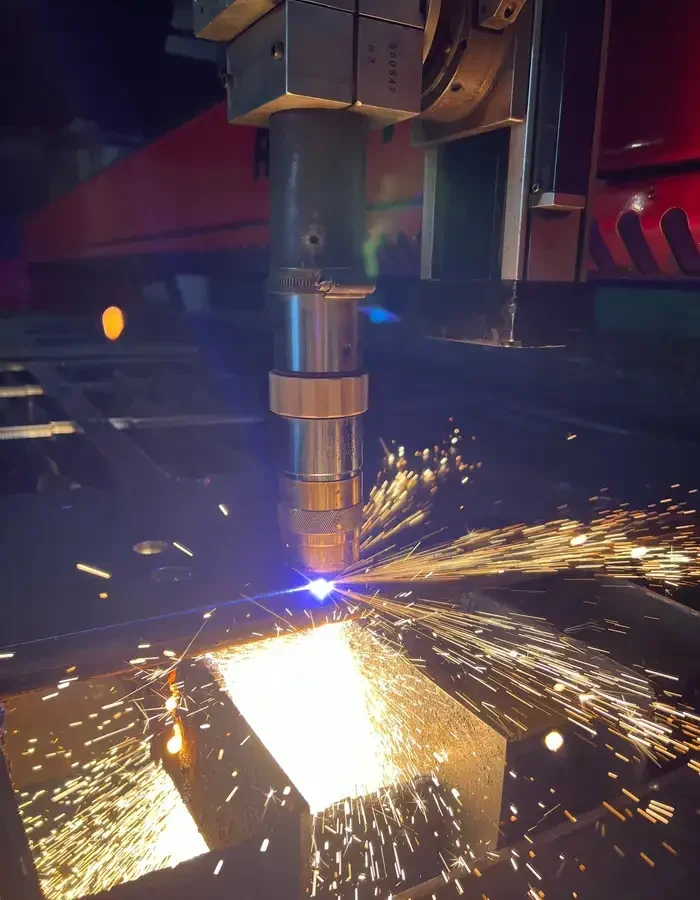
A common concern with bespoke work is the lead time. However, by consolidating machining, welding, and finishing under one roof at our Staffordshire precision engineering facility, we eliminate the logistical delays associated with multi-vendor supply chains.
Our process is built on technical transparency. We don’t just “make” steel; we provide an engineered solution. This involves:
- Technical Consultation: Reviewing your CAD drawings to identify potential fabrication efficiencies.
- Certified Welding: Ensuring every joint meets BS EN ISO 3834 standards for structural integrity.
- Precision Finishing: Providing the exact coating — be it powder coating, galvanising, or specialised industrial paint — required for the component’s end environment.
Conclusion: Making the Strategic Shift
As we move further into 2026, the competitive edge in British manufacturing will belong to those who prioritise precision and speed over initial unit price. Bespoke steel fabrication is not a luxury; it is a strategic tool for reducing site risk and ensuring long-term operational reliability.
If your next project requires complex industrial assemblies, consider the long-term value of a tailored solution. At Aldridge Fabrications, we have the capacity and the technical expertise to turn your specifications into high-performance engineered reality. For further guidance on UK steel standards and best practice, visit the British Constructional Steelwork Association (BCSA).
Get in touch with Aldridge Fabrications to discuss your next project and find out how a bespoke approach can reduce your site risk and total project costs.